
Send the same monthly CX deck to the executive team, a regional manager and a product owner, and each will read the pages meant for them, skip the rest, and quite possibly not open it at all. A distribution list isn’t a strategy.
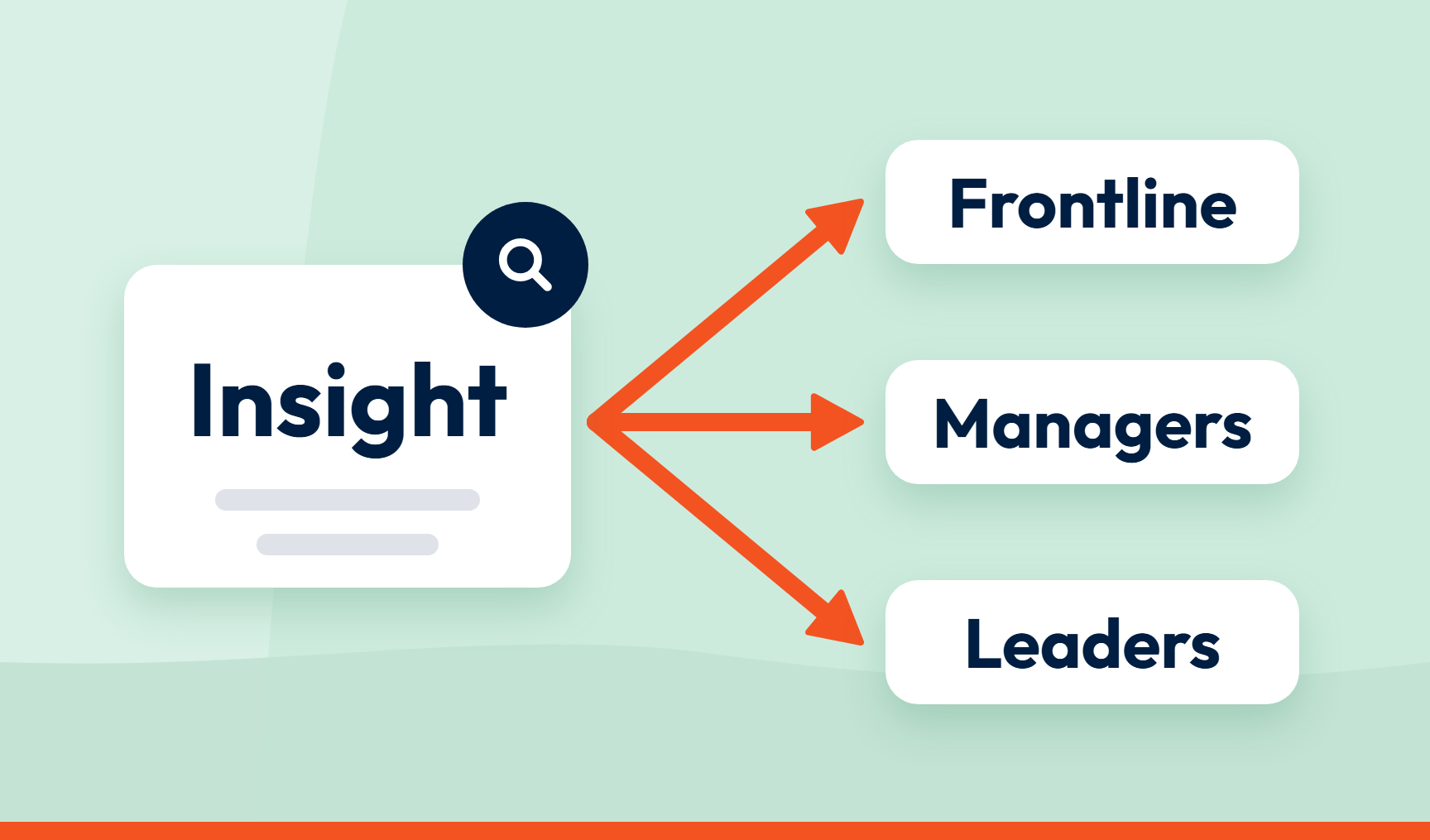
Sharing customer insights well means giving each audience the CX intelligence relevant to their decisions, in the format they already use, at a rhythm they can act on. The data stays the same. The cut doesn’t.
Key takeaways
- Sharing insights is a design problem. The bottleneck is rarely the channel. It’s sending everyone the same thing.
- Start with the audience: what do they decide, and what do they need to see to decide it?
- Choose the format to match the job: a dashboard, a shareable report, a BI view or an alert.
- Match the rhythm to how fast the audience can act. Daily for frontline teams, monthly for leadership.
- Keep every view connected to the same data and definitions.
Start with the audience, not the channel
Most sharing plans begin with a list of channels: email, a dashboard, a monthly meeting. Start instead with who needs what. Four audiences show the difference:
- A frontline team decides which customer issues need attention today.
- A store or regional manager decides how to run their sites this week.
- A product owner decides what to fix or build next.
- A leadership team decides where to invest and what to prioritise.
| Audience | What they decide | What they need to see | Format | Rhythm |
|---|---|---|---|---|
| Frontline team | What to fix today | Issues and cases needing action | Alert or ticket | Daily, or as it happens |
| Store or regional manager | How to run their sites | Topics and sentiment for their sites, plus what’s changed | Dashboard | Weekly, with alerts for urgent issues |
| Product owner | What to fix or build | Topics by feature, key drivers and supporting verbatims | Report and filtered dashboard | Each release cycle, with regular reviews |
| Leadership | Where to invest | Top drivers, trends against the last period, biggest risks and wins | Board pack or BI view | Monthly |
These examples are illustrative. The right format and cadence will depend on how each team works and how quickly it can act.
Choose the format for the job
Each format suits a different kind of use:
- A dashboard suits people who check regularly and want to explore their own area.
- A shareable report suits a decision or meeting, because it gives people a defined view they can read and forward.
- A BI view suits leaders who already work from operational and commercial dashboards and want CX intelligence alongside them. How that data gets there is covered in customer feedback integration.
- An alert suits anything urgent and specific, where waiting for the next report would be too late.
Match the rhythm to how fast they can act
A frontline team can fix a problem today, so a monthly report is stale by the time it arrives. Leadership may take weeks to make a decision, so a daily feed of the same numbers is noise.
Ask how quickly this audience can do something with what they’re told, then send at that speed and no faster.
One source, different cuts
Different audiences should see different cuts of the same underlying data. If dashboards, reports and board packs draw on separate sources or use different definitions, the numbers will eventually disagree. When someone spots a discrepancy, trust takes a hit. Keep the views connected to the same underlying feedback data and use consistent definitions, so each audience sees what it needs without creating competing versions of the numbers.
Persuading people to act on what they see is a separate challenge, covered in using CX data to influence stakeholders. This article is about getting the right insight to the right person in a form they can use.
Common ways it goes wrong
- Nobody owns a report, so nobody retires it when it stops being useful.
- Insights arrive with no clear next step for the person receiving them.
What you can do right now
Pick one audience that currently gets the full CX pack. Cut a one-page version for them: one question they decide on, one trend, one verbatim and one owner. Send it in the format they already use, and ask what they’d change.
How SmartCX helps
For CX leaders and managers who need to turn scattered feedback into decisions the business acts on, SmartCX gives every team one trusted data foundation for every dashboard, decision, action and AI workflow.
SmartCX, a VoC platform, brings surveys, reviews, support tickets, call transcripts and behavioural signals into one place and categorises feedback automatically. Teams can build custom reports and dashboards that track topics, sentiment and scores over time, and share them with the teams that need them, from board packs to frontline alerts. Integrations send CX intelligence to the tools teams already use, so everyone can share insights in the format they need. See it in a product tour.
Frequently asked questions
Who should receive customer insights?
Anyone who can act on them: frontline teams, store and regional managers, product owners and leadership. Each needs a different cut of the same data.
How often should you share customer insights?
Match the rhythm to how quickly each audience can act. For example, daily for frontline teams and monthly for leadership.
What format works best for sharing customer insights?
It depends on the job. Use dashboards for people who explore regularly, reports for decisions and meetings, BI views for leaders who work from operational data, and alerts for anything urgent.
Should every team get the same report?
No. The same data can be cut differently for each audience. Sending everyone the same thing is a common reason insights go unread.
How do you share insights without overloading people?
Send each audience only what bears on their decisions, at the speed they can act, and retire reports nobody opens.
How do you keep numbers consistent across different reports?
Draw every view from the same underlying feedback data and use the same definitions throughout.
Want to see how it works? Watch a tour or talk to us.