
A customer fills in a survey after a delivery goes wrong. Within the hour they get an email: “Thanks for your feedback, it matters to us.” Then nothing. Not when someone fixes it, not when the courier changes. The thank-you was the last they heard.
Closing the loop with customers means telling people what happened because they spoke up. It comes in two versions: a personal reply when their own issue is resolved, and a “you said, we did” message when their feedback led to a wider change. A thank-you email is neither.
Key takeaways
- A loop only closes when the customer knows what moved because of them.
- Acknowledging feedback raises an expectation. Silence afterwards can leave people worse off than if you’d never asked.
- Individual issues need updates along the way and an outcome at the end. Wider changes need a clear message once they’re live.
- Where you can identify who raised an issue, tell them directly first.
- An honest answer beats silence, even when it isn’t the one the customer wanted.
An acknowledgement isn’t closure
Replying to feedback sets up a promise: someone is on this. If nothing follows, you’ve shown the customer you heard them and did nothing about it.
Acknowledging feedback is the right first step in how teams close the loop. The basics, including what the inner and outer loops are, are in closing the loop in customer experience. This article picks up at the step most programmes skip.
Version one: the one-to-one reply
How a case reaches resolution, and who owns it along the way, is covered in how to close the inner loop.
While a case is open, keep the customer informed as it progresses. When it’s resolved, a good reply does four things:
- It says what was found. Not “your case is closed” but “the leak came from a failed seal in the flat above”.
- It says what was done, and who did it.
- It says what to expect now, and what to do if the problem returns.
- It comes from a person or team the customer can recognise, not a no-reply address.
Take a housing association tenant who reported a damp patch. A reply that names the repair, the date it was done and a direct contact closes the loop. “Your feedback has been actioned” is corporate for “noted”.
When the answer is no
Sometimes the answer is that you can’t fix it, or not yet. Say so anyway. Take a broadband customer who asks for weekend engineer appointments the provider doesn’t offer. The reply should explain the limit, confirm the feedback has been recorded and say whether any alternatives exist. The customer may not get the answer they wanted, but they know where they stand.
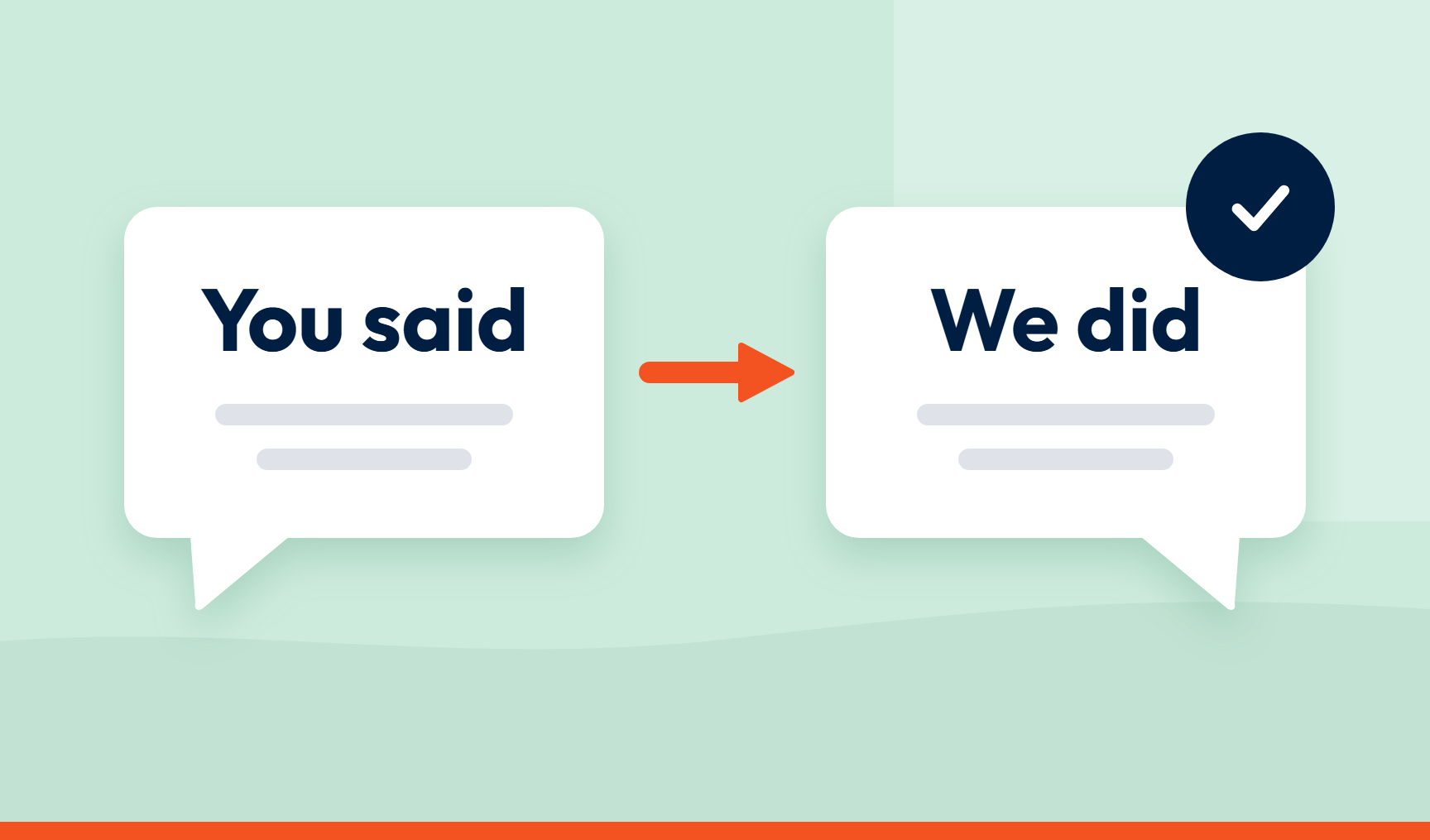
Version two: “you said, we did”
Some feedback doesn’t need a personal reply because the fix is bigger than one person. A supermarket finds that substitutions are the most common complaint in its online orders. Operations change how substitutions are chosen. That’s an outer loop fix, and the customers affected deserve to hear about it. Why these fixes so often stall is covered in why closing the outer loop is harder for CX leaders. Good news deserves the same treatment: acting on positive feedback closes the loop on what’s working.
A “you said, we did” message starts with CX intelligence: what customers raised, in numbers and in their own words. It then works in up to three lines:
- You said: what customers told you, in plain terms.
- We did: the specific change, and when it went live.
- What happens next: what they should notice, and where to tell you if they don’t. Include this only where there’s something useful to say.
Keep it short, dated and specific. “We’re always listening” tells customers nothing.
Who to tell, and when
Share insights with the teams behind the change first, so the message is accurate before it goes out. The right moment then depends on the kind of change:
- Wider improvements: communicate once the change is live. Where you can identify who raised the issue, for example through a customer ID captured with the response, contact them directly first. Then widen it: the app, the website, in-store signage, the newsletter.
- Changes that take time: say what you’re looking at and give a realistic date for your next update. Don’t promise a fix date you can’t keep.
- Wins: only claim the result if the change caused it. A fall in complaints that happened to coincide with the fix isn’t proof.
What you can do right now
Pick the last change your team made because of customer feedback. Check whether the customers who raised it were told. If they weren’t, write the three-line “you said, we did” message today.
How SmartCX helps
For CX leaders and managers who need to turn scattered feedback into decisions the business acts on, SmartCX gives every team one trusted data foundation for every dashboard, decision, action and AI workflow.
As a VoC platform, SmartCX brings surveys, reviews, support tickets, call transcripts and behavioural signals into one place, so teams can read the verbatim behind every insight. Cases are routed to the right owner with the verbatim attached, and Workflows can trigger alerts, follow-ups and case creation. SmartCX pushes insights into your CRM, helpdesk and BI tools, so CX intelligence reaches the teams who make the change. Once a change is live, trend charts show how scores and mention volumes move, so you can track what changes and tell customers what moved. That’s how teams turn feedback into actionable intelligence. See it in a product tour.
Frequently asked questions
What does closing the loop with customers mean?
It means telling customers what happened because of their feedback. That might be a personal reply when their own issue is resolved, or a “you said, we did” message when their feedback led to a wider change.
Is a thank-you email enough to close the loop?
No. A thank-you acknowledges the feedback. It doesn’t tell the customer what changed. The loop closes when they hear the outcome.
What is “you said, we did”?
A short message that tells customers what they raised, what you changed, and what to expect. It’s used for changes that came from patterns across many customers rather than one case.
How soon should you tell customers what changed?
For an individual issue, keep the customer informed as the case progresses and explain the outcome when it’s resolved. For wider changes, communicate once they’re live. If a fix will take time, say what you’re looking at and when you’ll next update.
Should you tell customers when you can’t fix something?
Yes. An honest explanation is better than silence, even when you can’t give the outcome they wanted. Say why, and what you can do instead.
Who should tell customers what changed?
The team that made the change or owns the case. A named person or team is more credible than a no-reply address.
Want to see how it works? Watch a tour or talk to us.